Extraction / Ratio / Grind
Brewing methods
Brewing coffee means controlling how water dissolves compounds from the bean. Each method changes pressure, time, filtration, temperature, texture and concentration. The key is understanding what problem each tool solves.
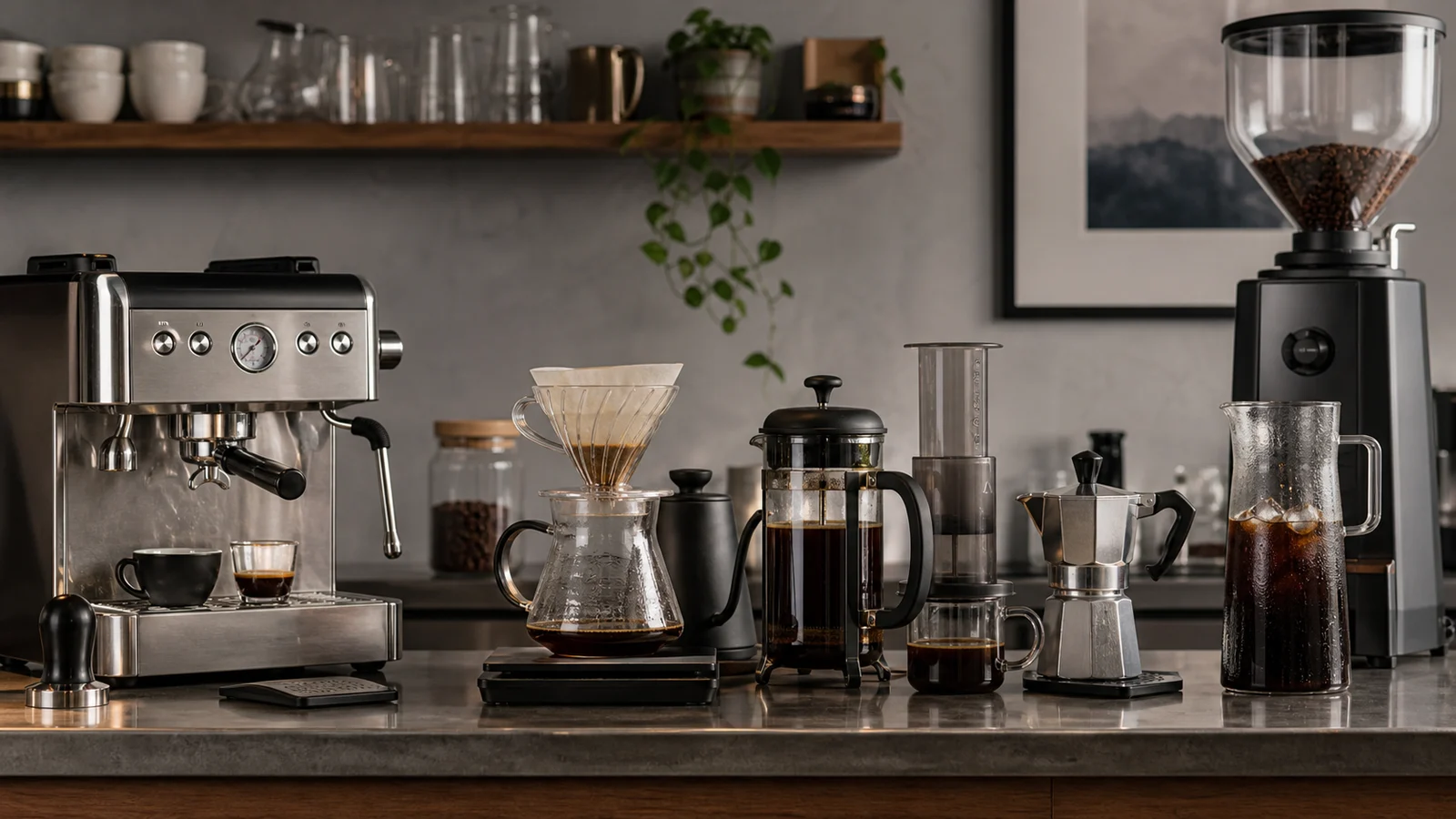
A finer grind increases resistance and extraction; a coarser grind reduces contact and bitterness.
The coffee-to-water ratio defines concentration. Change it before rebuilding the whole recipe.
More time extracts more. Too little can taste sour; too much can dry out and turn bitter.
Temperature and mineral content affect sweetness, acidity, body and clarity.
Before choosing a method
Extraction has four main controls
A method is not better because it costs more. It is better when it lets you control what you want: clarity, body, intensity, repeatability or convenience. Espresso uses pressure and a fine grind; V60 uses gravity and paper; French press uses immersion; cold brew uses time and low temperature.
If you want to learn quickly, change one variable at a time. Keep the same coffee, weigh coffee and water, time the brew, and adjust grind before redesigning the whole recipe.
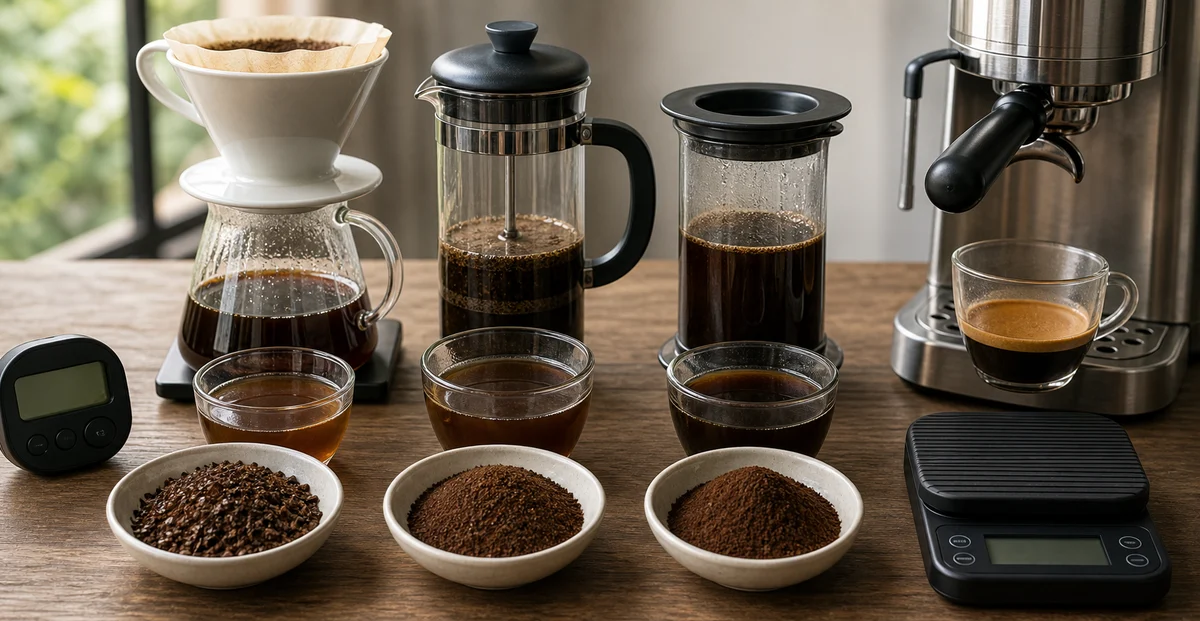
Comparison
Main methods
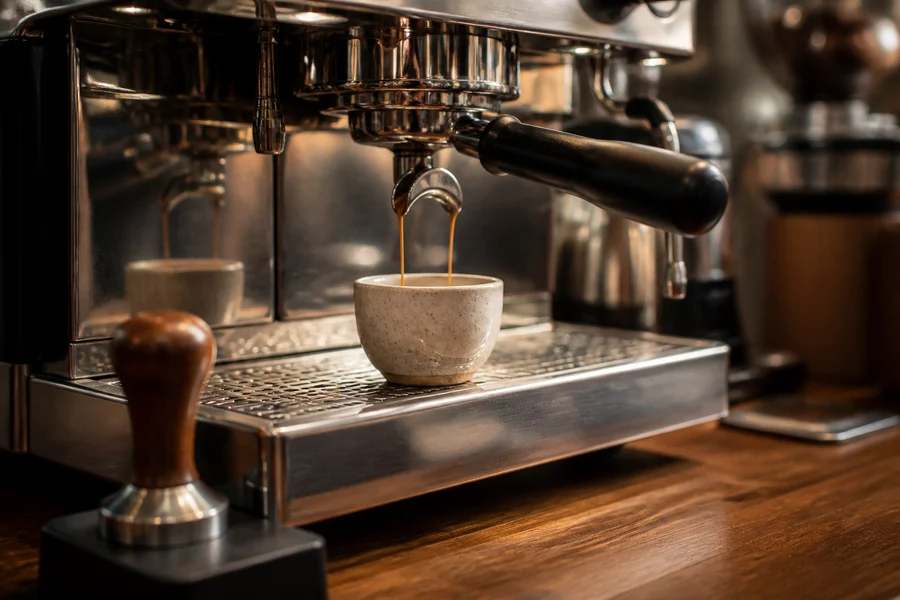
Espresso
- Ratio
- About 1:2 in 25-35 s
- Tool
- Espresso machine, portafilter, tamper and fine grinder
- Grind
- Very fine
- Profile
- Concentrated, dense and intense; the base for many milk drinks.
- Best for
- When you want texture, crema and a short, high-intensity drink.
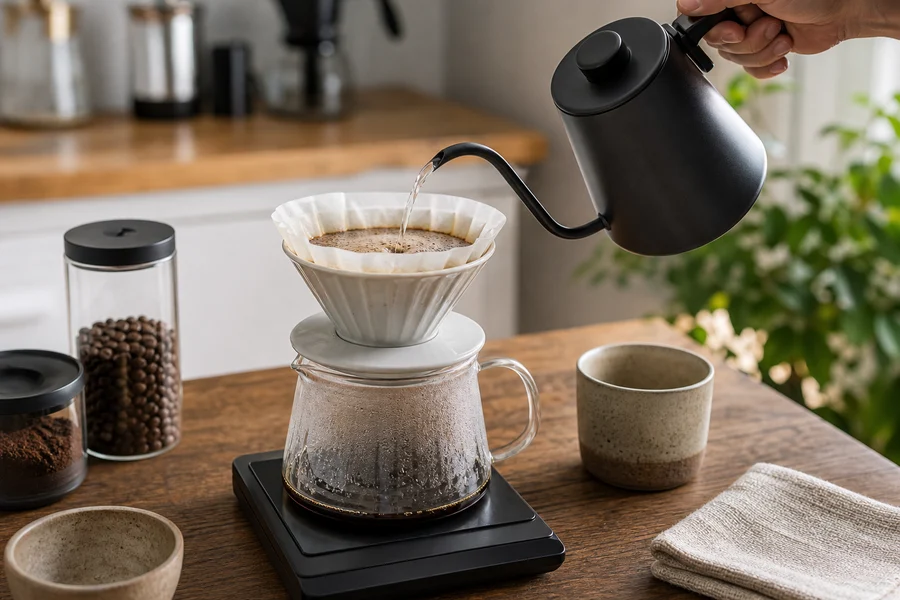
V60 / Pour-over
- Ratio
- 1:15 to 1:17 in 2:30-4:00
- Tool
- V60 dripper, paper filters, gooseneck kettle and scale
- Grind
- Medium-fine
- Profile
- Clean, aromatic, with defined acidity and strong origin expression.
- Best for
- For complex, floral, washed or light-roasted coffees.
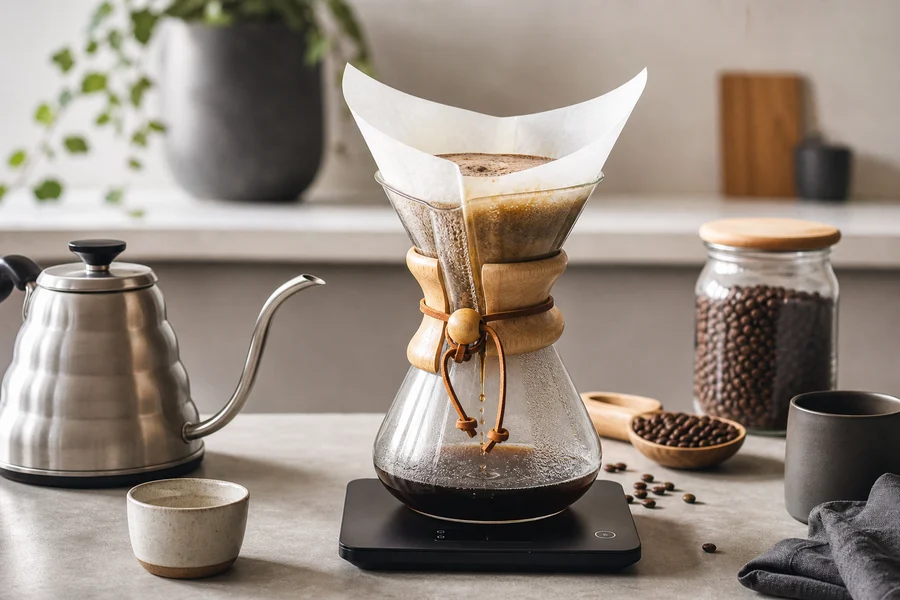
Chemex
- Ratio
- 1:15 to 1:17 in 4:00-5:30
- Tool
- Chemex, thick filters, kettle and scale
- Grind
- Medium to medium-coarse
- Profile
- Very clean, light and silky; less oil and less body.
- Best for
- For brewing several cups with an elegant, clear profile.
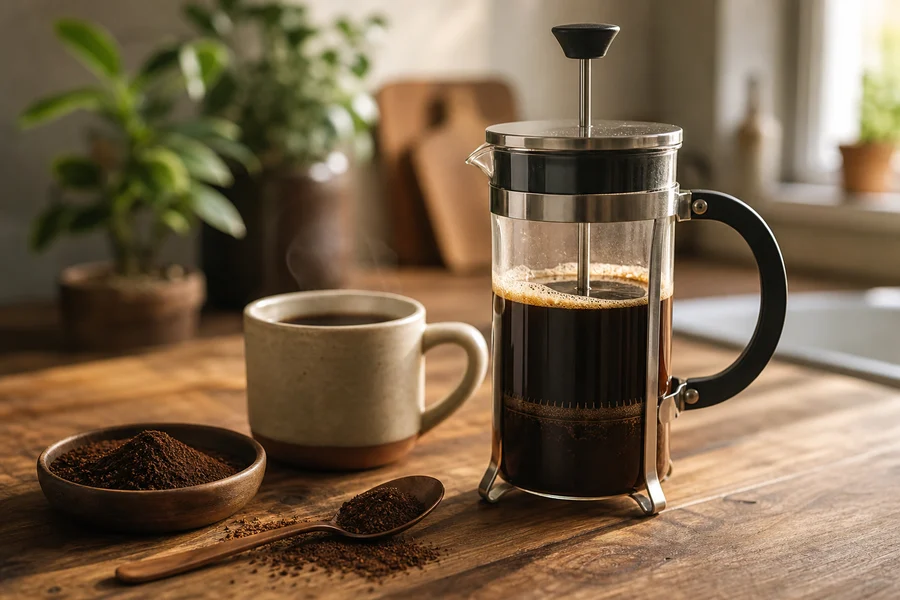
French press
- Ratio
- 1:14 to 1:16 in 4-8 min
- Tool
- French press, coarse grinder, kettle and timer
- Grind
- Coarse
- Profile
- High body, dense texture, more oils and fine particles.
- Best for
- For chocolatey, nutty, full-bodied profiles without paper filters.
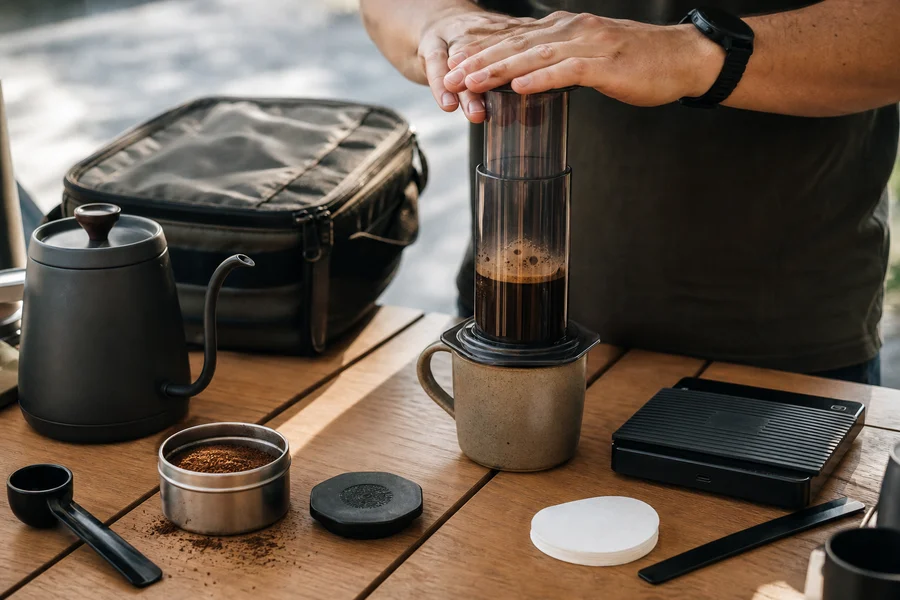
AeroPress
- Ratio
- Very flexible: 1:10 to 1:16
- Tool
- AeroPress, filters, stirrer, grinder and scale
- Grind
- Medium-fine to medium
- Profile
- Versatile: close to a soft espresso or a concentrated filter cup.
- Best for
- For travel, experimentation and quick control over variables.
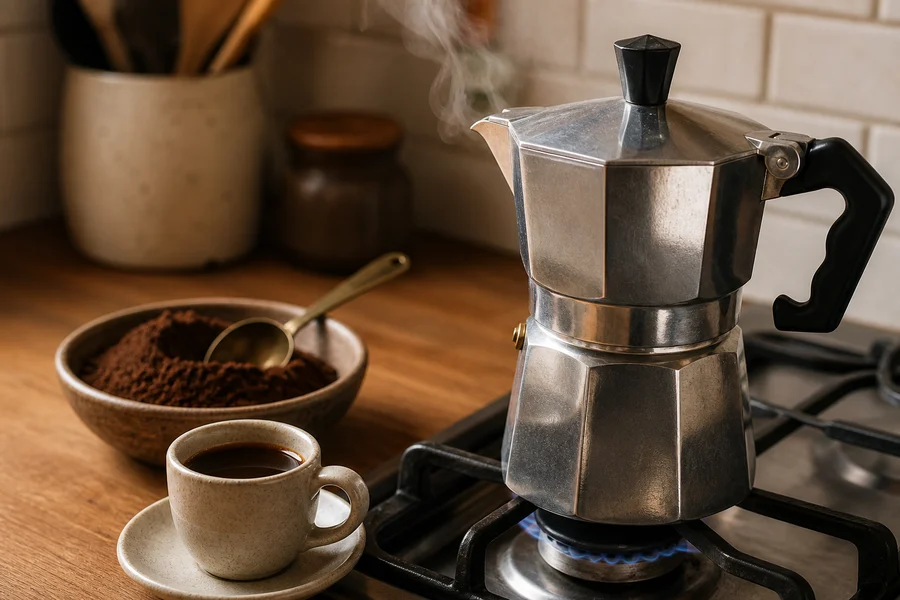
Moka pot
- Ratio
- Full basket, water below valve
- Tool
- Moka pot, stove or hob, hot water and medium-fine grinder
- Grind
- Medium-fine, not as fine as espresso
- Profile
- Intense, roasty and full-bodied; can turn bitter if overheated.
- Best for
- For a strong cup at home without an espresso machine.
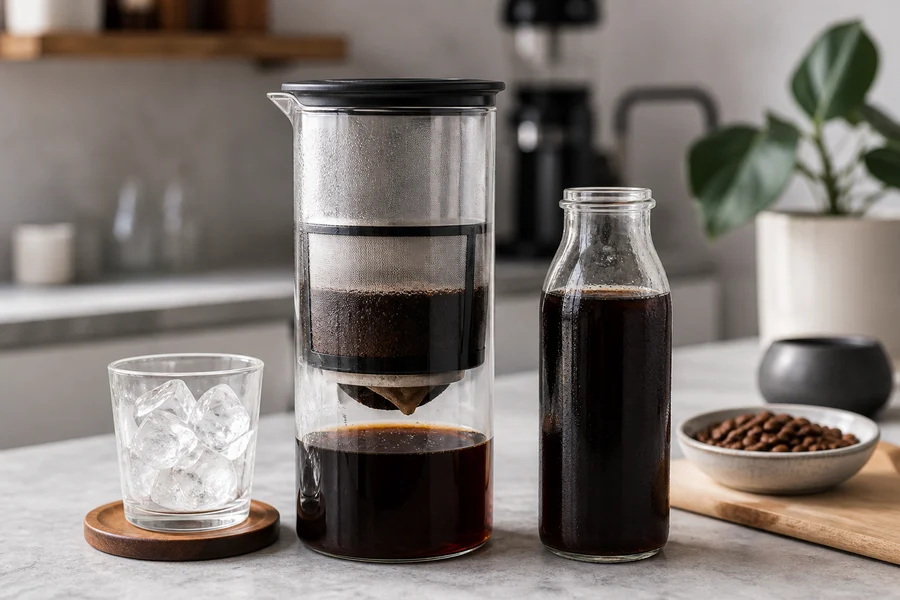
Cold brew
- Ratio
- 1:8 to 1:12 for 12-18 h
- Tool
- Jar or cold brewer, filter, bottle and fridge
- Grind
- Coarse
- Profile
- Low perceived acidity, rounded sweetness and soft body.
- Best for
- For cold drinks, prepared batches and easy-drinking profiles.
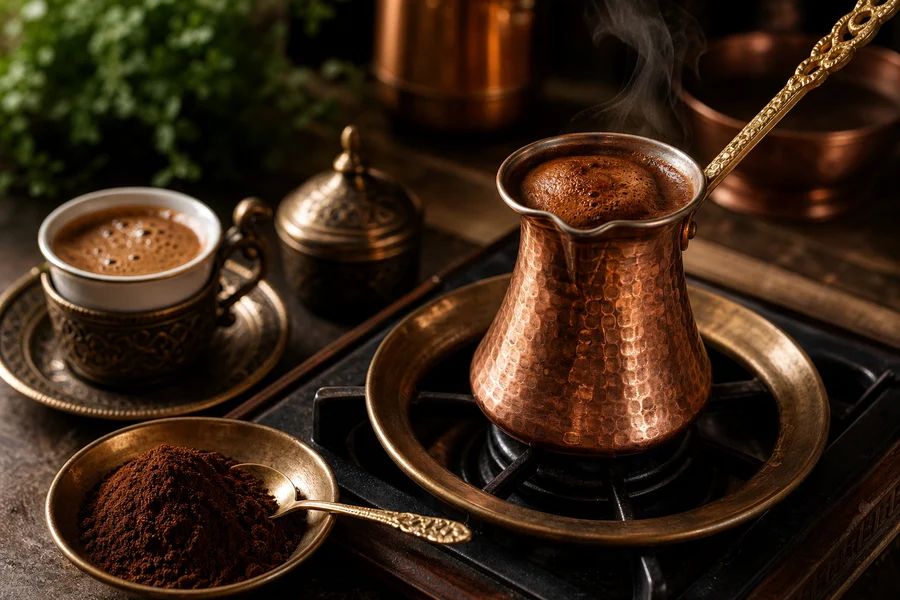
Ibrik / Turkish
- Ratio
- 7-10 g per small cup
- Tool
- Cezve or ibrik, extra-fine coffee and heat source
- Grind
- Extra fine
- Profile
- Very aromatic, spiced if desired, with sediment texture.
- Best for
- For an intense tradition where the grounds are part of the experience.
Diagnosis
How to correct a recipe
You do not need to memorize hundreds of recipes. Learn to read defects. Sour usually points to under-extraction; bitter and dry to over-extraction; watery to low concentration; cloudy to too many fines or poor filtration.
Sour or short
Grind finer, raise temperature, increase time or improve distribution.
Bitter or dry
Grind coarser, lower temperature, reduce time or avoid excessive turbulence.
Watery
Use more coffee, less water or a more complete extraction.
Heavy or cloudy
Improve filtration, reduce fines, use a more uniform grind or change method.