Botany / History / Varietals
The coffee plant
Coffee does not begin in a cup: it begins as a tropical forest plant, with a complex evolutionary history, relatively recent domestication and genetic diversity that now shapes flavor, resilience and the future of cultivation.
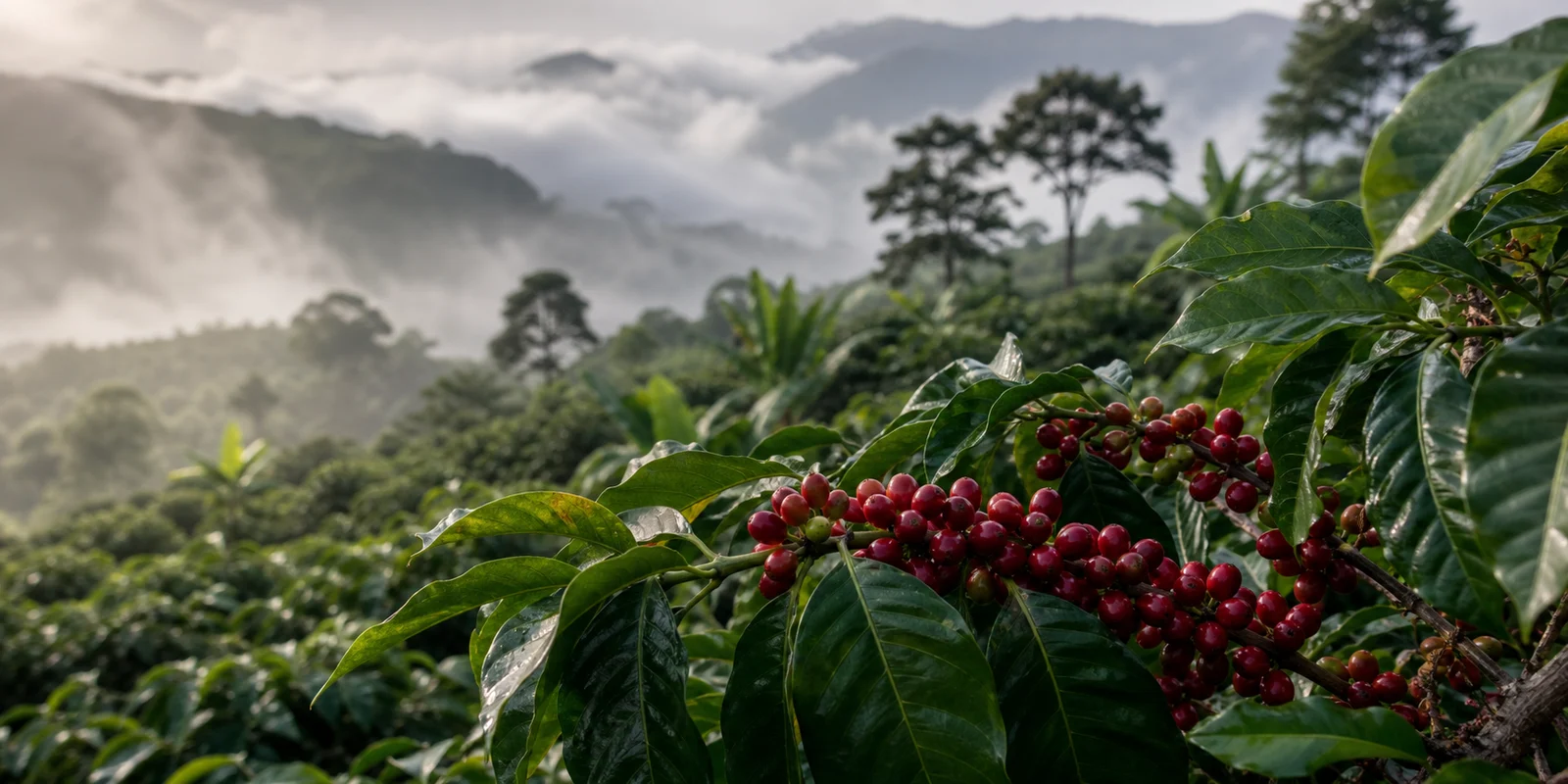
Rubiaceae, the same family as many tropical understory plants.
Coffea, with more than 120 described species; only a few are cultivated commercially.
Arabica and canephora/robusta dominate the market, but they are not the only coffee species.
The roasted seed of a drupe; the coffee bean is botanically a seed.
Several species
There is no single coffee plant
When we say the coffee plant, we simplify a lot. In reality we are talking about the Coffea genus, a broad group with more than 120 described species. The global industry relies mainly on Coffea arabica and Coffea canephora, known commercially as robusta, but species such as Coffea liberica and Coffea stenophylla also help explain diversity, resistance and the climate future.
Arabica and robusta matter most because they concentrate almost all commercial consumption. Even so, they should not be confused with all coffee. Each species has different botany, genetics, environmental adaptation and cup potential.
Coffea arabica
The species most associated with specialty coffee
Aromatic, complex and sensitive. It prefers many cool highland zones and has a narrow genetic base outside Ethiopia.
See arabicaCoffea canephora
The species commercially known as robusta
More vigorous, with more caffeine and better heat tolerance. It is key for blends, espresso, soluble coffee and fine robusta.
See robustaOther species
Botanical diversity and climate future
C. liberica, C. stenophylla and other species do not dominate the market, but they matter for resilience, flavor potential and breeding.
See varietal contextClear botany
What a coffee tree really is
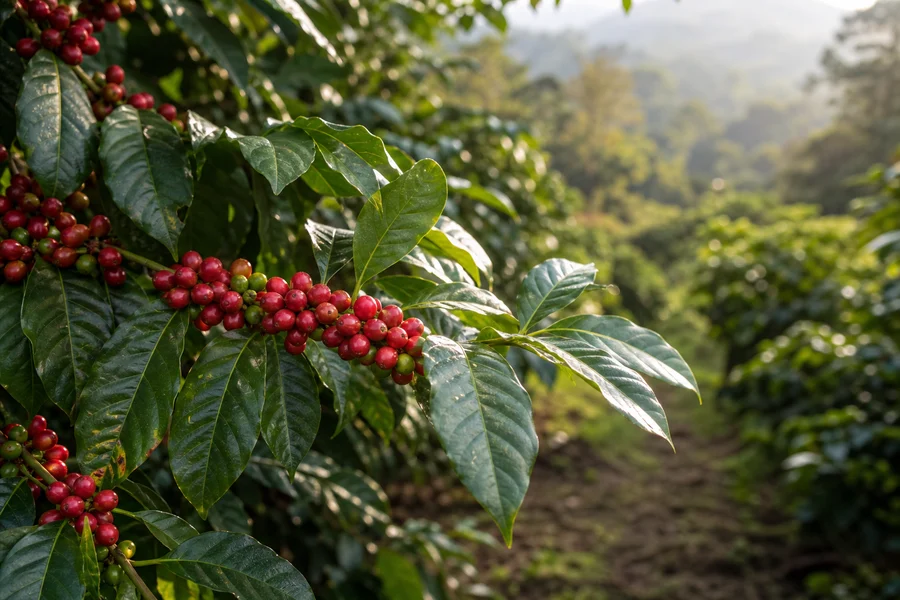
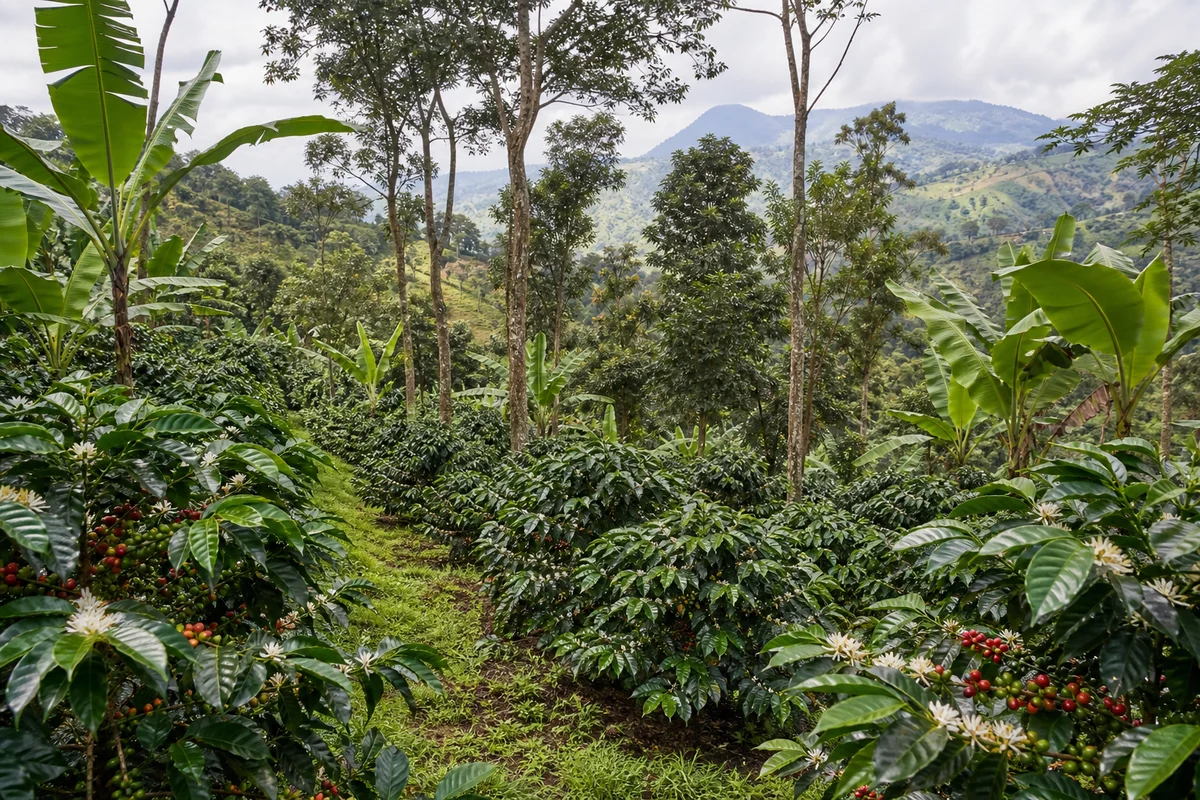
The coffee tree is an evergreen shrub or small tree. In cultivation it is pruned for harvest, but naturally it can grow several meters tall. Its opposite, glossy, leathery leaves help conserve water and capture filtered light below taller trees.
The flowers are white, aromatic and short-lived. After flowering, the fruit takes months to ripen into a cherry. Inside that cherry are usually two facing seeds: the seeds we roast, grind and extract. If only one rounded seed develops, it is called peaberry.
Caffeine does not exist to wake humans; it is a chemical defense of the plant. In the cup, that molecule becomes part of coffee's sensory and physiological experience.
Cherry anatomy
The fruit layers matter
To understand coffee processing, look at the cherry layer by layer. Some parts bring sugars and moisture, others protect, others are removed early and others remain during drying. That is why natural, washed and honey processes are decisions about which fruit layers stay with the seed, for how long and under what control.
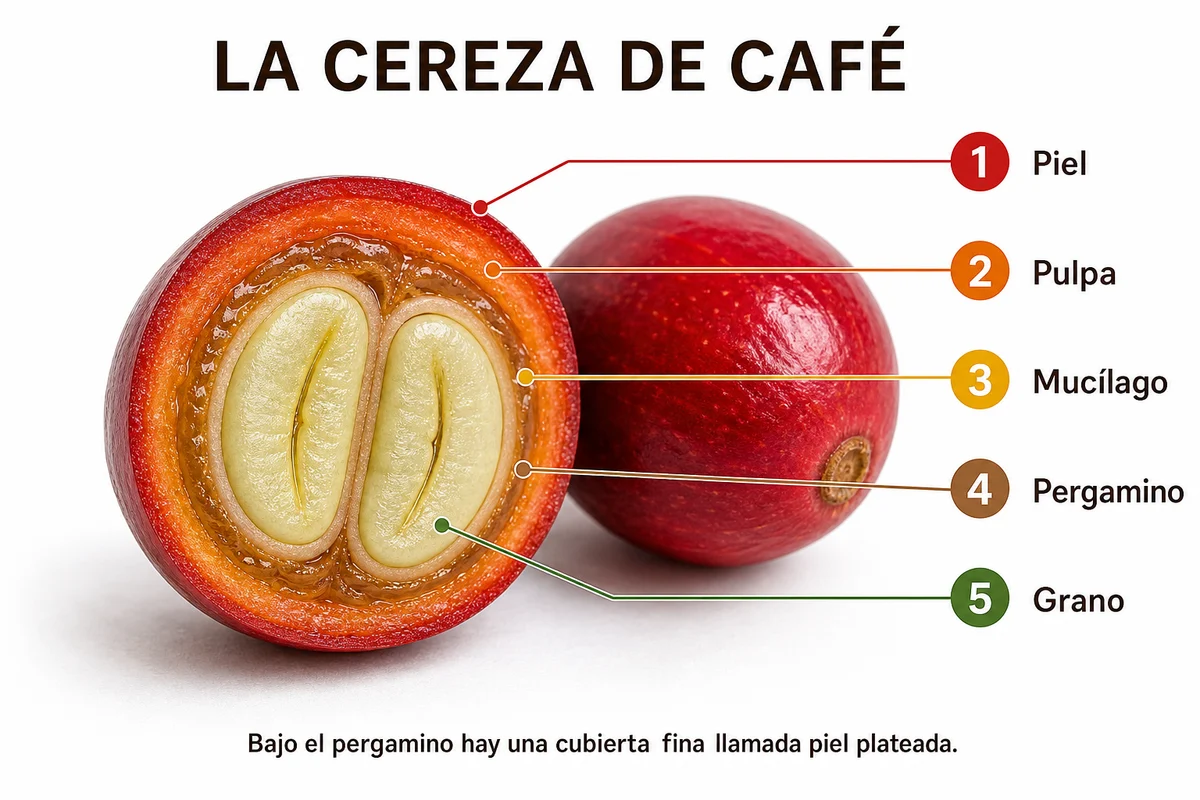
Exocarp or skin
The outer layer of the cherry. It changes from green to red, yellow or orange when ripe and protects the fruit.
Pulp
The fleshy layer under the skin. It contains water, sugars, acids and compounds that feed fermentation.
Mucilage
A sticky, pectin- and sugar-rich layer around the parchment. Its presence or removal defines washed, honey and controlled fermentations.
Parchment
A fibrous protective layer around the seed during drying. It is usually removed during hulling before export.
Silver skin
A very thin film attached to the seed. Part of it comes off during roasting as chaff.
Seeds
The two beans we roast, grind and extract. If only one seed develops, it becomes a rounder peaberry.
Ancestors
Arabica: a species born from two lineages
Coffea arabica is not simply a fine variety. It is an ancient hybrid species. Genetic evidence indicates that it arose when two related lineages, close to Coffea canephora and Coffea eugenioides, crossed naturally. The result was an allotetraploid plant with 44 chromosomes.
That mix helps explain why arabica can produce aromatic, sweet and complex cups. It also explains its fragility: cultivated arabica outside Ethiopia passed through strong genetic bottlenecks, leaving many populations too similar in the face of disease and climate change.
Documented history
From African forest to global drink
The popular story of Kaldi and his goats is useful folklore for remembering Ethiopia, but it is not an ancient historical source. Coffee as a drink does not clearly appear in classical Greek or Roman literature; its strong documentation belongs to the medieval and early modern Islamic world.
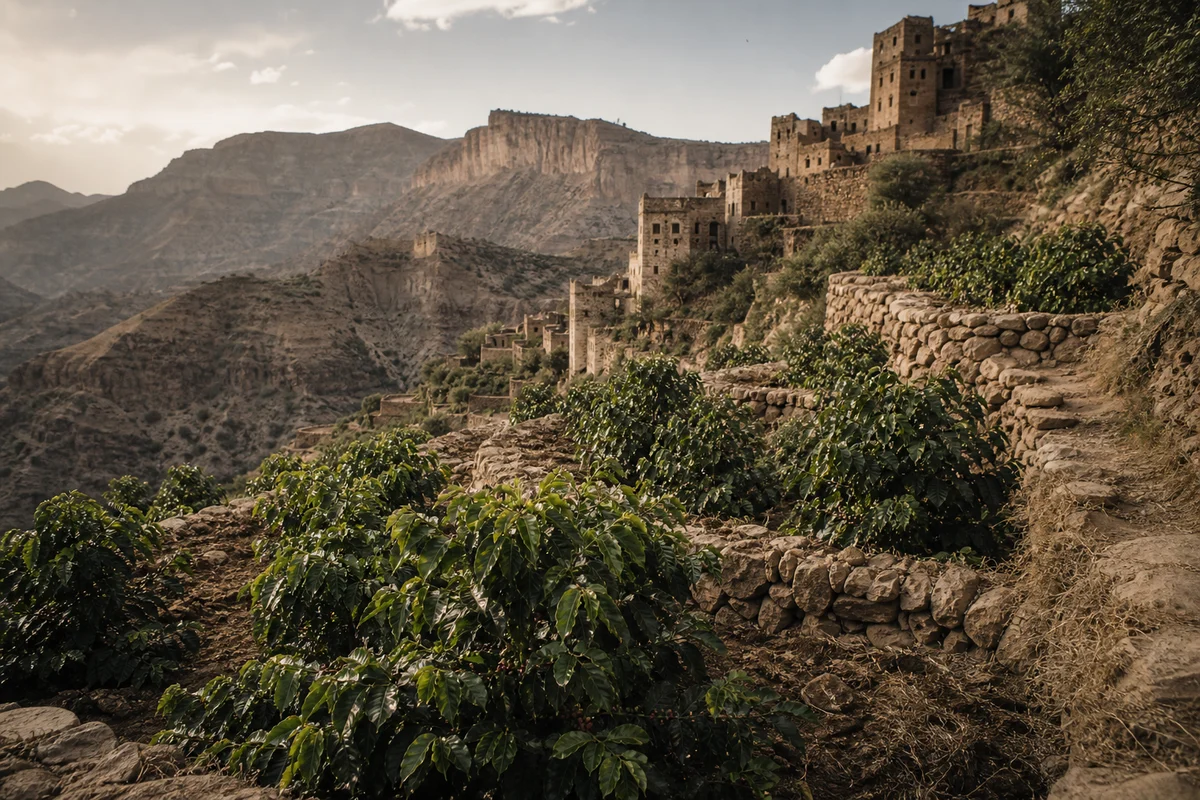
In Yemen, during the 15th and 16th centuries, coffee was cultivated, traded and debated as a drink. From ports such as Mocha, it traveled into the Ottoman Empire, then Europe, Asia and the Americas.
Coffea arabica emerged through natural hybridization between lineages close to C. canephora and C. eugenioides.
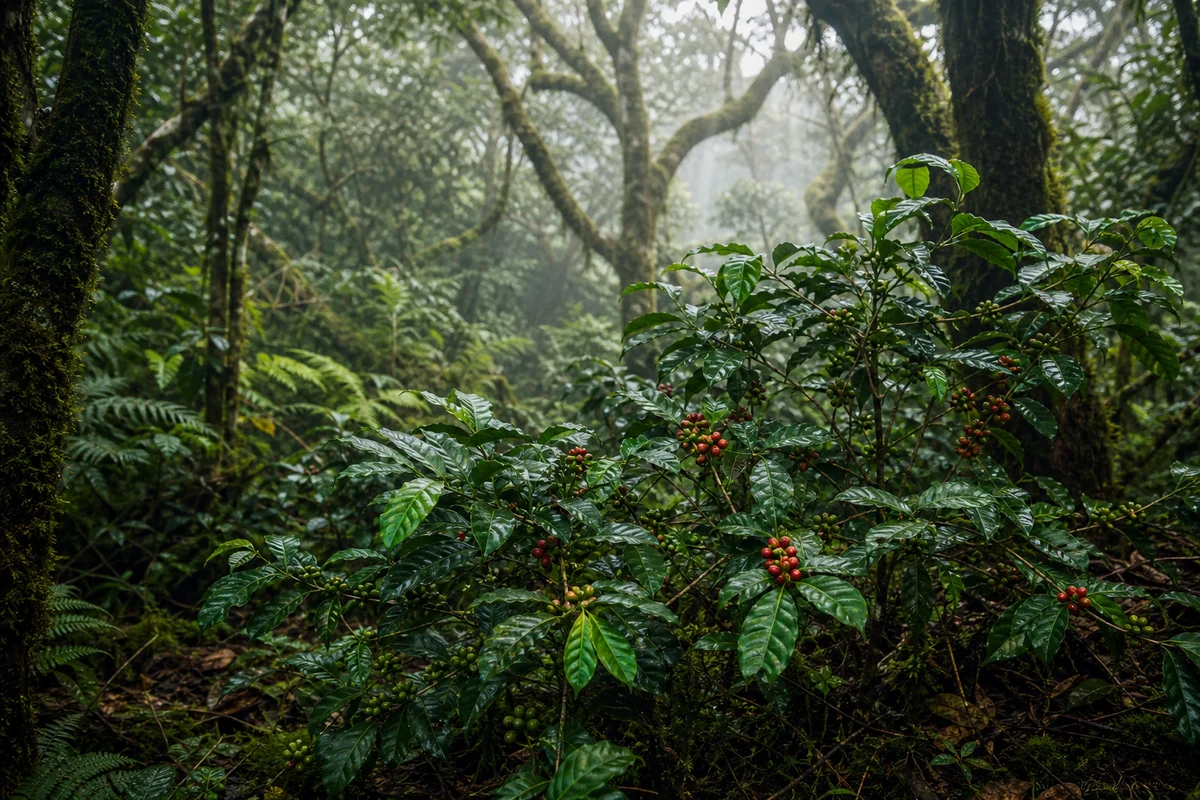
Wild arabica populations became associated with montane forests in Ethiopia and neighboring regions.
Documented use of the drink appears in Yemen, linked to Sufi communities that valued its stimulating effect.
Coffee moved from the Red Sea into the Ottoman Empire, Europe, Asia and the Americas with a narrow genetic base.
Coffee leaf rust and other diseases pushed breeders toward robusta, Timor hybrids and local selections.
Genetics, participatory selection and F1 hybrids seek quality, productivity, resistance and climate adaptation.
Where it lives
The coffee belt and its ecosystems
Commercial coffee grows mainly between the Tropics of Cancer and Capricorn. But tropical does not always mean hot and low. Arabica often prefers highland areas, cool nights, well-distributed rain and well-drained soils. Robusta tolerates heat, low altitude and some biological pressures better.
Place changes both plant and cup. Altitude, shade, temperature, soil, rainfall, microbiology and management affect growth, flowering, ripening and chemistry.
Current varietals
From Typica to F1 hybrids
In coffee, varietal usually means a cultivated variety or recognizable line. Some are natural mutations, others farm selections, directed crosses or materials carrying resistance genes from related species.
Traditional arabicas
Typica, Bourbon, Caturra, Mundo Novo, Catuai, Pacas, Maragogipe, Pacamara
Often clear and sweet in the cup, but many are vulnerable to leaf rust and require good agronomy.
African selections and Ethiopian landraces
SL28, SL34, Rume Sudan, Gesha, Ethiopian local collections
Important for sensory quality, specific tolerances and genetic diversity beyond the Typica-Bourbon base.
Introgressed and resistant hybrids
Catimor, Sarchimor, Marsellesa, Parainema, Obata, T5296
Bring resistance genes, often from the Timor hybrid, to face leaf rust and improve productive stability.
Modern F1 hybrids
Centroamericano H1, Milenio H10, Mundo Maya, Starmaya
Seek hybrid vigor: more productive plants, good quality and better response to disease or variable climate.
Robusta and future species
Selected C. canephora, C. liberica, C. stenophylla
Robusta adds productivity and heat tolerance. Other species matter for resilience, though they need more research and market development.
The important trend is not a single super plant. It is building portfolios: varieties for exceptional quality, varieties for rust pressure, heat, agroforestry systems and changing climates.
Future
Why genetic diversity matters
Coffee leaf rust, rising temperatures, irregular droughts and forest loss threaten production. The answer is not only technological; it is also biological. Conserving wild arabica, studying high-quality robusta, evaluating species such as stenophylla and protecting germplasm banks are as important as improving roasting or extraction.
For a coffee drinker, this means every cup depends on a botanical chain. Traceable, diverse and well-managed coffees support agriculture capable of preserving flavor and resilience.
Reference sources
This page summarizes botanical and historical information from technical and specialized educational sources.